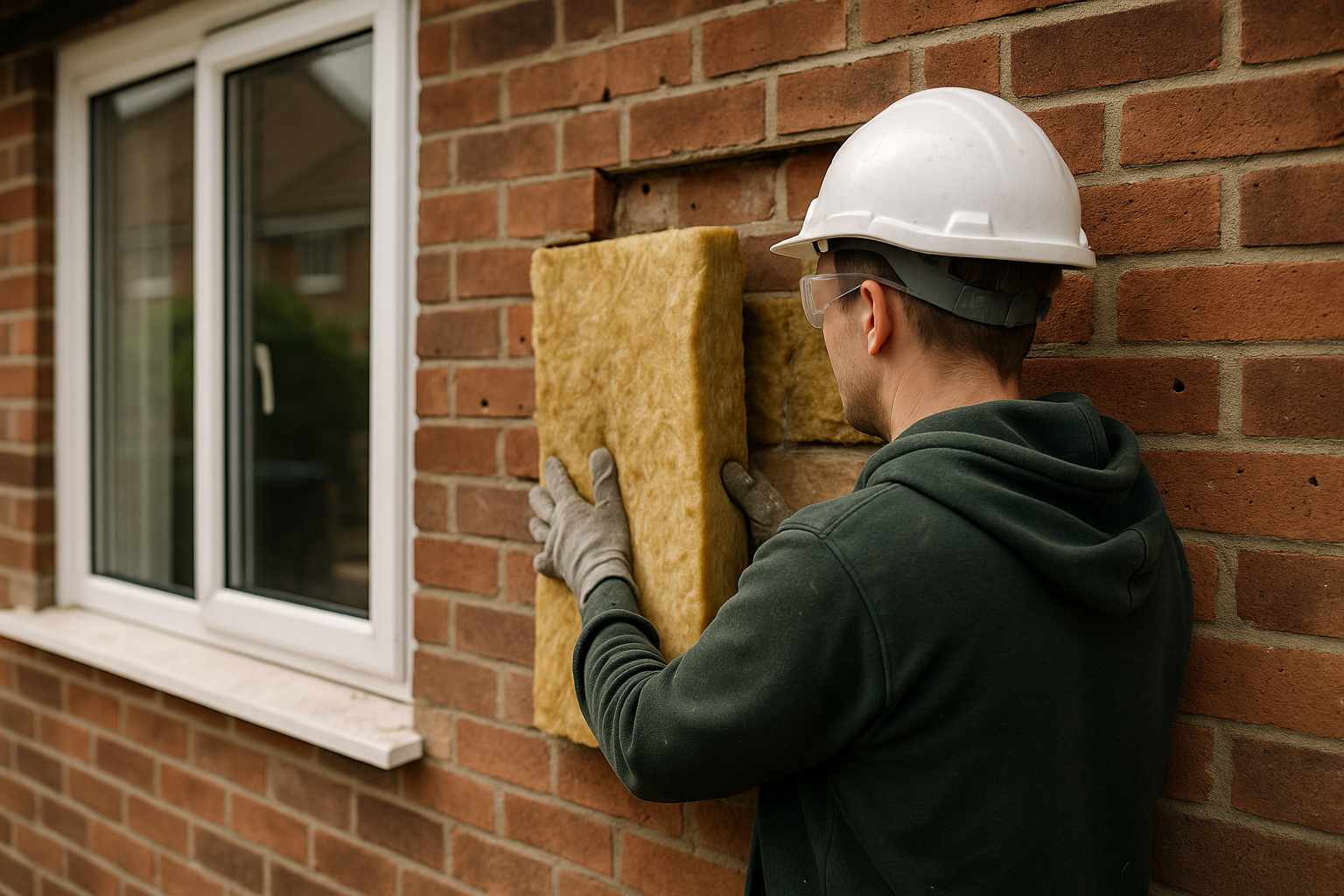
Understanding Cavity Wall Insulation
As energy costs continue to soar, many homeowners in the UK are searching for effective ways to enhance their home’s efficiency and reduce heating expenses. One of the most effective solutions is cavity wall insulation, which can be accessed through various energy efficiency grants in the UK, including the ECO4 insulation scheme and the Great British Insulation Scheme.
What Is Cavity Wall Insulation?
Most houses constructed in the UK since the 1920s feature cavity walls—two layers of bricks with a gap in between. Without proper insulation, heat can escape through this gap, leading to increased energy bills. By filling this cavity with insulating materials, homeowners can create a more comfortable and energy-efficient living space.
Advantages of Cavity Wall Insulation
- Lower heating expenses
- Improved Energy Performance Certificate (EPC) rating
- Fewer cold spots in the home
- Reduced draughts
- Access to potential free insulation through UK grants
- Long-term energy savings
Accessing Energy Efficiency Grants in the UK
There are several government-supported programs designed to assist homeowners in securing free or discounted insulation.
The ECO4 Insulation Scheme
The ECO4 insulation scheme, which runs until 2026, provides funding for:
- Cavity wall insulation
- Loft insulation
- External wall insulation
- Heating upgrades and renewable energy solutions
Eligibility Criteria: Homeowners may qualify if:
- The property has an EPC rating of D, E, F, or G
- Someone residing in the home receives a qualifying benefit
- The home is inadequately insulated or challenging to heat
Many households are eligible for free cavity wall insulation under the ECO4 scheme.
The Great British Insulation Scheme (GBIS)
The Great British Insulation Scheme provides support for both low-income and middle-income households, focusing on:
- Cavity wall insulation
- Loft insulation
- Smart heating improvements
Benefits of GBIS include:
- Quick approval processes
- Simple eligibility requirements
- Assistance for homeowners who may not qualify for ECO4
Local Authority and Regional Grants
In addition to national schemes, local councils in the UK also offer energy efficiency grants, particularly for older or less efficient properties. These grants can assist in funding:
- Wall insulation
- Upgrades to doors and windows
- Heating system improvements
Cavity Wall Insulation Beading
A modern and highly effective method for cavity wall insulation is the use of insulation beading.
What Are Insulation Beads?
Insulation beads are tiny polystyrene particles injected into the wall cavity. They interlock, creating a moisture-resistant and high-performance insulation layer.
Benefits of Insulation Beads:
- Excellent thermal efficiency
- Water-resistant properties
- Even distribution within the cavity
- Quick and clean installation
- Durable lifespan
This method is increasingly favored by installers across the UK.
Various Types of Cavity Wall Insulation
Here are the primary types of cavity wall insulation commonly used in UK homes:
- Polystyrene Beads (EPS Beading) – The most popular choice, known for its moisture resistance and energy efficiency.
- Mineral Wool Fibre – Offers fire resistance and excellent acoustic insulation.
- Urea-Formaldehyde Foam – Often used in older or narrower cavities, although it is less common today.
Choosing the Right Type of Insulation
If you are considering insulation options:
- Opt for EPS beads if you want modern, moisture-resistant insulation and your home has cold patches.
- Choose mineral wool if you require soundproofing and prefer a fibre-based solution.
Most UK installers recommend bead insulation for contemporary homes due to its efficiency and longevity.
Cost of Cavity Wall Insulation in the UK
Here are the typical installation costs based on property type:
| Property Type | Average Cost |
|---|---|
| Flat | £300–£450 |
| Terrace | £500–£700 |
| Semi-Detached | £700–£1,000 |
| Detached | £1,200–£1,800 |
Thanks to the ECO4 insulation scheme and Great British Insulation Scheme, many homeowners can obtain insulation at little to no cost.
Signs You May Need Cavity Wall Insulation
Look out for these signs indicating the need for cavity wall insulation:
- Cold rooms
- High energy bills
- Visible condensation
- Draughts
- Low EPC score
- No previous insulation records
Frequently Asked Questions
1. Can I access free cavity wall insulation in the UK?
Yes, many households qualify under the ECO4 or GBIS schemes.
2. Which type of insulation is the most efficient?
Polystyrene bead insulation typically offers the best thermal performance for UK homes.
3. Are there energy efficiency grants available for landlords?
Yes, but tenants must give consent, and the property must meet specific criteria.
4. How long does cavity wall insulation last?
It usually lasts between 25 to 40 years, depending on the material used.
5. Does insulation help reduce damp?
While it can decrease condensation, any structural damp issues will need separate attention.